English
 中文简体
中文简体 русский
 عربى
عربىAs automotive door panels become larger, lighter, and more integrated with functional features, controlling deformation during injection molding is becoming an important engineering priority. Recent automotive development work has placed greater emphasis on Moldflow analysis, gate optimization, rib design, and early correction of warpage risks before tooling is manufactured. For overseas procurement teams, the practical concern is how to select tooling that can maintain dimensional stability without creating repeated modifications during mold trials.
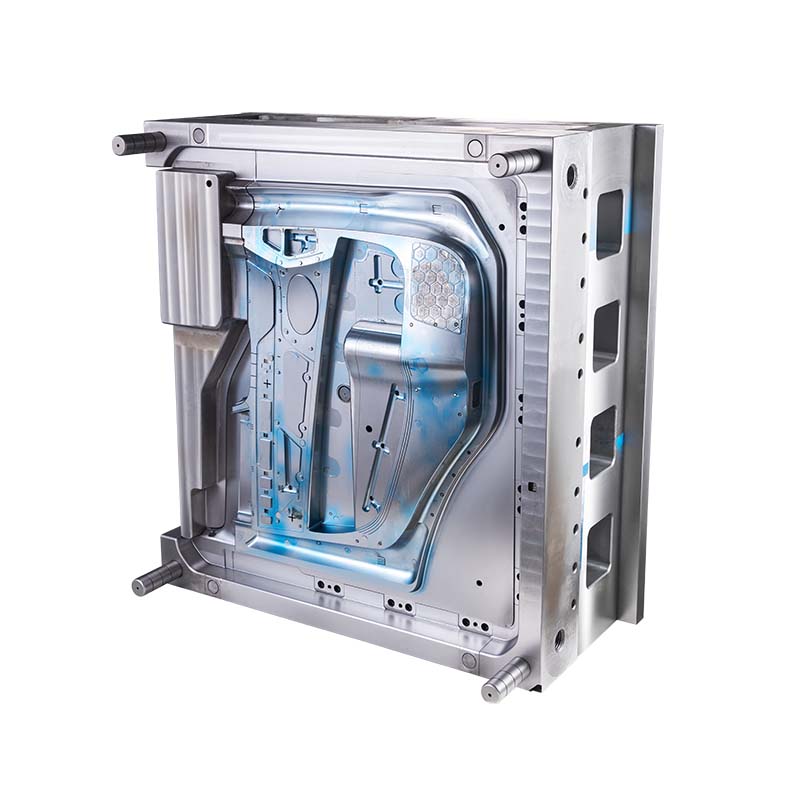
Large Door Panels Amplify Small Design Issues
A door panel has a relatively broad molded surface, so even modest differences in shrinkage can influence fit, gap, flushness, and assembly performance. Wall-thickness transitions, ribs, bosses, clips, and curved surfaces can all create different cooling and shrinkage behavior.
This is why our mold engineering process begins with the part rather than the steel. Before machining, we review the product geometry, material requirements, draft angles, structural features, and critical dimensions to identify areas that could create deformation during production.
Material Behavior Should Be Considered Early
Material selection has a direct relationship with mold design. Automotive interior trim commonly uses materials such as polypropylene and TPO, while reinforced or modified grades may introduce additional flow and shrinkage considerations.
For engineers, the resin grade should be confirmed before finalizing the tooling structure. Important factors include:
- Material shrinkage characteristics
- Melt-flow behavior
- Fiber or filler orientation
- Processing temperature
- Expected cooling conditions
Using generic material assumptions during mold design can make later process adjustment more complicated, particularly when the final resin behaves differently from the material used during early testing.
Rib Design Can Influence More Than Strength
Ribs are essential for improving stiffness without unnecessarily increasing wall thickness, but their geometry also affects filling, cooling, and local shrinkage. An unsuitable rib arrangement may create sink marks or contribute to deformation around large cosmetic surfaces.
Recent automotive engineering research has used structural analysis and Moldflow analysis together, allowing engineers to optimize ribs while examining gate design, flow balance, and warpage before tool development.
For a tooling supplier, this means structural requirements and molding requirements should be reviewed together. A rib that looks effective from a mechanical perspective may still need modification to support stable injection molding.
Cooling Balance Is Critical During Production
Cooling is one of the most important factors affecting dimensional consistency. If one section of a door-panel mold cools significantly differently from another, the resulting shrinkage can become uneven.
Our approach is to evaluate cooling-channel placement according to the actual geometry rather than applying a uniform layout across the entire tool. Particular attention is given to thicker sections, ribs, corners, and areas close to functional features.
A well-planned cooling system can also make process tuning more predictable during mold trials, helping production engineers distinguish between tooling-related deformation and machine or processing adjustments.
Gate Position Influences Warpage Risk
For a large door panel, the gate system determines how molten material travels through the cavity. An unsuitable gate location may create unbalanced filling, unfavorable weld-line positions, or uneven packing pressure.
Engineers should therefore assess gate placement alongside parting lines, visible surfaces, ribs, and cooling circuits. In more complex applications, simulation can help identify potential flow problems before physical tooling is completed. Current automotive engineering discussions increasingly emphasize digital validation as a way to reduce late-stage tooling changes.
Trial Molding Should Verify Dimensional Stability
T1 sampling should not focus only on whether the part can be molded. For automotive door components, the trial should also examine critical dimensions, warpage, surface appearance, ejection, fit, and repeatability.
A useful validation process can include:
- Comparing molded parts with approved CAD data
- Checking critical assembly interfaces
- Measuring deformation across large surfaces
- Reviewing shrinkage trends after cooling
- Recording process conditions for future adjustments
This documentation gives both the buyer and manufacturer a clearer basis for deciding whether a tooling modification is necessary.
Selecting a Manufacturer With Problem-Solving Capability
When sourcing a Car Door Mold, buyers should evaluate more than machining accuracy or quotation price. Experience with DFM analysis, Moldflow review, cooling design, gate optimization, material behavior, and trial correction can have a direct effect on project efficiency. As manufacturers of automotive molds, we focus on identifying warpage risks before steel cutting and coordinating part design with actual molding conditions. For procurement teams seeking a reliable Car Door Mold partner, this engineering-first approach can help create tooling that is easier to validate and better prepared for stable production.