English
 中文简体
中文简体 русский
 عربى
عربىAutomotive interiors are moving toward cleaner surfaces, integrated functions, and more sophisticated decorative effects, making tooling requirements increasingly connected to the final appearance of the vehicle. In-mold decoration (IMD), in-mold film processes, and multi-material molding are receiving greater engineering attention for automotive interior components, including door panels. For overseas buyers, the important question is not simply whether a Car Door Mold can produce the required shape, but whether the tooling is prepared for decorative films, precise registration, material compatibility, and stable production.
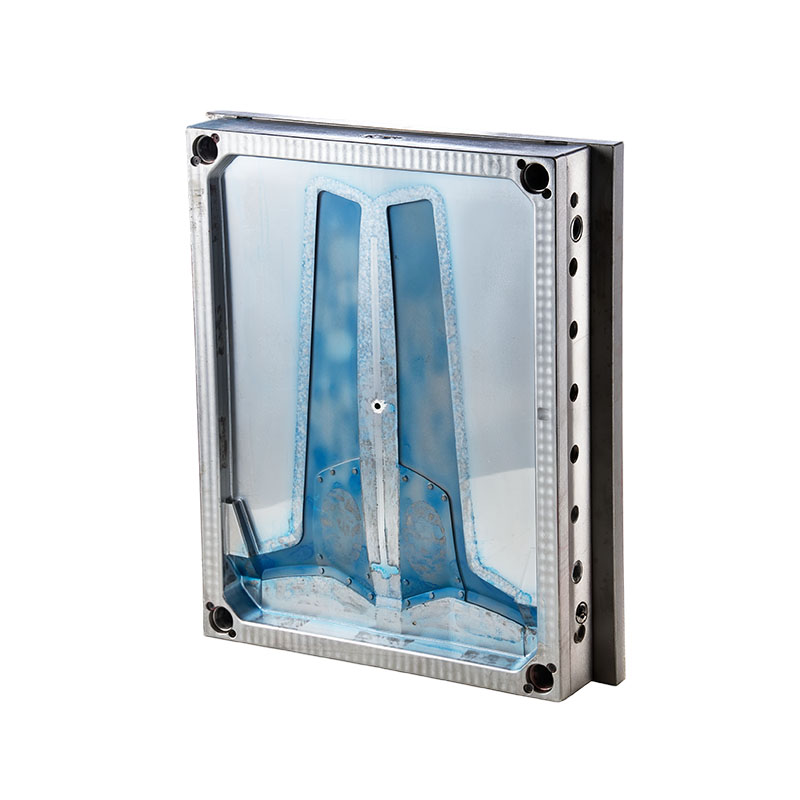
Why Decorative Features Change Mold Design
Traditional door trim can rely on molded-in textures, painting, or separate decorative components. IMD and related technologies introduce additional requirements because a film or decorative layer becomes part of the molding process. Film thickness, adhesive design, material selection, cavity geometry, and molding parameters can influence adhesion, surface deformation, registration, and texture quality.
For tooling engineers, decorative requirements should therefore be considered before mold construction rather than added after the cavity has already been completed. Early communication between the buyer, film supplier, injection molder, and mold manufacturer can also clarify process limitations before machining begins.
Registration Accuracy Needs Early Attention
When a decorative film contains patterns, logos, lines, or functional graphics, its position must correspond accurately with the molded geometry. Small deviations can become noticeable around door handles, switches, speaker areas, storage compartments, and other visible features.
A practical design review should consider:
- Film positioning and fixing methods
- Cavity geometry and locating features
- Gate position relative to decorative areas
- Film stretching during forming
- Ejection movement and potential interference
These details can help reduce the possibility of discovering registration problems during late-stage mold trials.
Surface Texture and Decoration Must Work Together
Automotive door panels often combine textured areas with smooth, glossy, or decorative surfaces. Tooling details therefore have a direct influence on the final visual effect. Automotive tooling projects have also explored texture-matched parting-line solutions for door-panel applications, demonstrating how small mold features can affect cosmetic consistency.
From a manufacturer's perspective, the cavity surface should not be treated independently from the decorative process. Texture depth, draft angles, parting-line location, gate placement, and film behavior need to be evaluated as one system. This becomes particularly important when the component contains large Class A or highly visible surfaces.
Material Compatibility Can Affect Tool Performance
Different decorative films, substrates, adhesives, and molding resins respond differently to heat and pressure. The selected combination can influence bonding, shrinkage, dimensional stability, and surface appearance.
This is also relevant as automotive suppliers explore recycled and modified polymer systems for interior applications. Material behavior can differ between grades, so buyers should provide the intended resin and decorative-film specifications as early as possible. A mold designed without complete material information may require additional engineering adjustments after the first trial.
Gate and Cooling Design Still Matter
Decoration technology does not eliminate conventional injection-molding challenges. Large door components still require balanced filling, effective cooling, appropriate venting, and controlled shrinkage. Gate location can influence weld-line position and surface appearance, while uneven cooling may contribute to dimensional variation.
For complex door panels, our mold engineering process evaluates the gate system, cooling circuits, ejection structure, and cosmetic surfaces together. This integrated approach is particularly useful when a component combines thin sections with ribs, mounting points, clips, and other functional features.
Validation Should Include the Decorative Process
A tooling trial should reproduce the intended production conditions as closely as practical. Checking only part dimensions is insufficient when decorative films or multi-material processes are involved.
Engineers should verify:
- Decorative-film positioning
- Adhesion and surface consistency
- Texture continuity
- Filling and weld-line behavior
- Ejection performance
- Dimensional stability after cooling
Early validation gives the project team an opportunity to determine whether a tooling modification, material adjustment, or process change is required before volume production.
Choosing a Supplier for Advanced Door Trim
As automotive interiors become more decorative and functionally integrated, buyers need tooling partners who understand the relationship between part geometry, film technology, material behavior, and injection molding. When evaluating a Car Door Mold supplier, procurement teams should look beyond basic machining capability and consider DFM analysis, surface-texture control, decorative-process experience, trial support, and engineering communication. A manufacturer capable of addressing these factors early can make advanced door-panel programs easier to validate and more practical to scale for stable production.