English
 中文简体
中文简体 русский
 عربى
عربىAs automotive door panels become more integrated, visually demanding, and structurally complex, mold design decisions made before machining can have a major effect on production stability. Recent automotive tooling developments are placing greater attention on texture-matched parting lines, integrated functional features, and design-for-manufacturing analysis. For overseas procurement teams and engineers, the key question is increasingly how to prevent tooling problems before the mold reaches the injection molding machine.
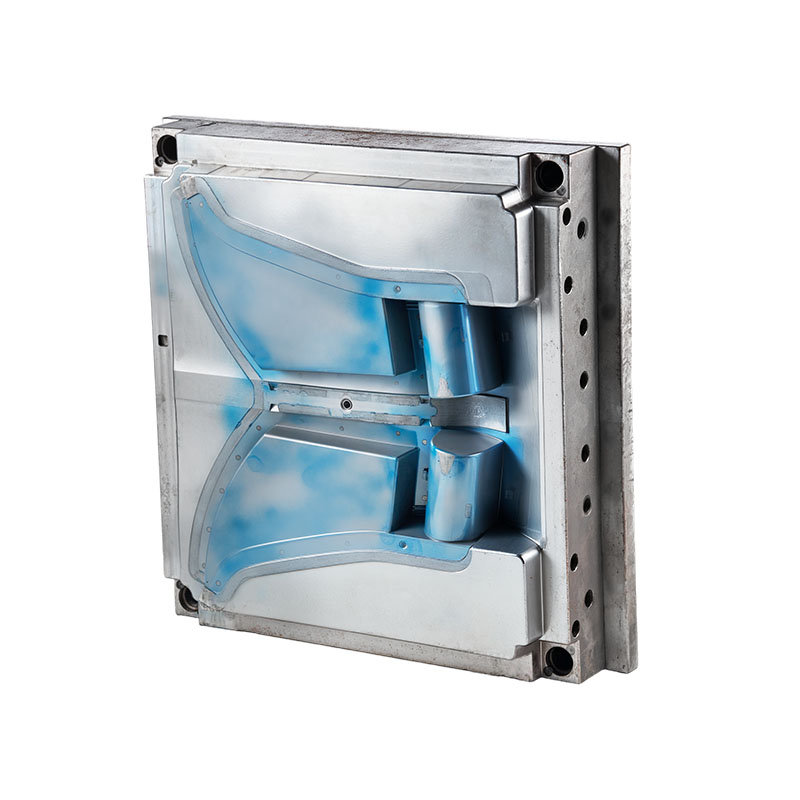
Why Parting Line Design Matters
The parting line is not simply where the mold opens. On a visible door component, its position can influence flash, texture continuity, dimensional accuracy, ejection, and the appearance of the finished surface. A poorly selected parting line may also make maintenance more difficult when inserts or sliding mechanisms are involved.
For large automotive door components, our mold engineering process begins by reviewing the product geometry, Class A surfaces, draft angles, clips, ribs, openings, and assembly interfaces together. This helps identify a parting strategy that supports both appearance and manufacturability.
Complex Door Panels Need Earlier DFM Analysis
Modern door trims may combine broad cosmetic surfaces with speaker openings, storage areas, mounting points, ribs, clips, and other functional structures. These features can create undercuts or local thickness changes that complicate mold construction.
A practical DFM review should examine:
- Demolding direction and draft
- Parting-line visibility
- Slider and lifter requirements
- Rib and boss locations
- Potential shrinkage and warpage
- Ejection access and maintenance space
Identifying these issues during design review is generally more efficient than modifying a completed cavity.
Texture Matching Is Becoming a Tooling Priority
Surface texture is particularly important for interior door components because even a small mismatch can become visible on a large decorative area. Recent automotive tooling examples have demonstrated texture-matched parting-line solutions that allow tooling maintenance while preserving the intended surface appearance.
For procurement teams, this is worth discussing before approving a mold. The question should not only be whether the tool can produce the correct geometry, but whether it can reproduce the required grain consistently around parting areas, inserts, and gate locations.
Gate Location Can Affect Appearance and Stability
Large door panels require careful control of material flow. Gate placement influences filling balance, weld-line position, packing behavior, and surface quality. If the gate is positioned without considering the visible surface and structural geometry, engineers may face additional tuning during mold trials.
Our manufacturing approach considers gate design together with runner configuration, cooling layout, wall thickness, and expected material behavior. This integrated evaluation helps reduce the risk of solving one molding issue while creating another elsewhere on the component.
Sliders and Lifters Should Serve the Production Strategy
Complex automotive tooling often requires sliders, lifters, inserts, or other mechanisms to release undercuts and functional features. However, adding mechanisms simply to accommodate an unsuitable product design can increase maintenance requirements and tooling complexity.
A better approach is to first determine whether the part geometry can be adjusted without compromising its functional requirements. When mechanisms are necessary, their travel, wear surfaces, lubrication, accessibility, and replacement requirements should be considered from the beginning.
Validation Should Go Beyond the First Good Sample
A mold that produces one acceptable part has not necessarily demonstrated production readiness. Trial validation should examine dimensional stability, surface texture, flash, weld lines, ejection behavior, cooling performance, and repeatability.
Current automotive molding discussions also emphasize tighter integration between tooling, process control, and quality verification. From a manufacturer's perspective, early sampling and structured feedback between the mold maker, injection molder, and buyer can identify engineering adjustments while they are still manageable.
Selecting a Car Door Mold Manufacturer
For buyers sourcing automotive tooling internationally, the most useful evaluation is not simply a comparison of mold price. Engineering review capability, parting-line strategy, surface-texture control, mechanism design, trial support, and maintenance planning all influence the long-term value of a Car Door Mold. A manufacturer with practical experience in automotive tooling can help translate complex door-panel geometry into a mold that is easier to validate, maintain, and use in stable production.