English
 中文简体
中文简体 русский
 عربى
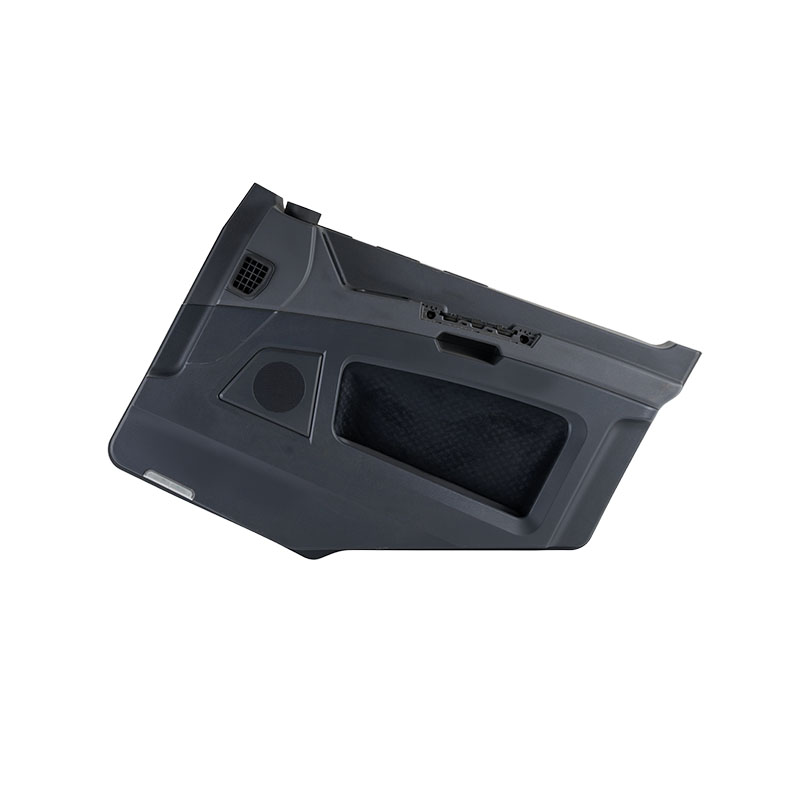
عربىCar Door Mold development is entering a more demanding stage as automotive manufacturers balance lightweight construction, attractive interior surfaces, recycled materials, and stable mass production. Recent automotive projects show growing interest in recycled polymers, integrated door-panel structures, and molding processes that reduce secondary operations. For buyers and engineers, the challenge is no longer simply producing a mold that forms the required shape, but creating tooling that supports material changes and consistent production quality.
Material Selection Starts Before Mold Design
Door panels commonly use materials such as PP, TPO, ABS, and reinforced polymers, with the final selection depending on stiffness, impact resistance, appearance, temperature exposure, and processing behavior. The resin should therefore be confirmed before detailed mold engineering begins. A recent automotive materials example demonstrated recycled PP and wood-based materials being used in door trim applications while maintaining dimensional and processing requirements.
For a mold manufacturer, this means evaluating shrinkage, fiber orientation, melt flow, and cooling requirements together rather than treating material selection as a separate purchasing decision.
Lightweighting Changes the Tooling Equation
Vehicle lightweighting remains important for both conventional and electric vehicles, while large plastic door components present opportunities for weight optimization. Injection-molded automotive parts can use lightweight fillers and structural approaches to reduce mass while maintaining dimensional stability.
When developing molds for lightweight door panels, engineers should pay particular attention to:
- Wall-thickness distribution and transition areas
- Rib placement and structural support
- Gate location and filling balance
- Cooling efficiency around thicker sections
- Warpage caused by uneven shrinkage
These factors directly influence whether a lightweight design remains stable after molding.
Surface Quality Requires More Than Polishing
Door trim is a highly visible component, so surface defects such as sink marks, weld lines, flow marks, and texture inconsistencies can become expensive production problems. Current automotive molding projects are also exploring thin-wall designs, integrated textures, and controlled flow systems for large door-panel surfaces.
Our approach as a mold manufacturer is to consider the cosmetic surface during the initial mold-flow and gate-layout stage. Texture depth, draft angles, ejection strategy, and cooling-channel positioning all need to work together. A polished cavity alone cannot compensate for an unsuitable filling strategy.
Recycled Materials Need Stable Processing
Sustainability is influencing automotive interior development, but using recycled resin is not simply a matter of replacing virgin material. Material consistency can affect flow behavior, shrinkage, surface appearance, and processing windows. Recent industry projects have demonstrated that recycled-content materials can be incorporated into automotive trim when material formulation and processing are carefully controlled.
For procurement teams, it is useful to ask whether the mold supplier has considered the intended recycled grade during tool design rather than modifying production parameters only after tooling is completed.
Cooling Design Can Prevent Production Problems
Large door-panel molds have substantial surface areas, making cooling performance particularly important. Uneven cooling can contribute to differential shrinkage and deformation, especially when the component contains ribs, varying wall thicknesses, or reinforced materials.
A practical tooling review should therefore examine:
- Cooling-channel distribution
- Hot spots around complex geometry
- Mold temperature requirements
- Expected cycle stability
- Accessibility for future maintenance
Better cooling design can make process adjustment easier during trial molding and reduce the risk of repeated tool modifications.
Validation Should Reflect Real Production Conditions
A successful automotive mold needs to perform beyond the first acceptable sample. Trial molding should verify dimensions, appearance, ejection, cooling, filling balance, and compatibility with the intended production material. Automotive tooling buyers are also paying closer attention to documentation and validation processes because production approval involves more than visual inspection.
From a manufacturer’s perspective, early communication between the mold designer, injection molder, material supplier, and purchasing team helps identify problems before they become costly tooling changes.
Choosing a Mold Partner for the Next Vehicle Program
As automotive door panels become lighter, more integrated, and more sustainability-focused, tooling needs to evolve with the component rather than follow a fixed mold-making formula. Buyers looking for a reliable Car Door Mold supplier should evaluate design capability, material experience, cooling strategy, trial validation, and responsiveness to engineering changes. A manufacturer that understands the relationship between part design, resin behavior, mold structure, and production conditions can provide more practical tooling support from prototype development through series production.