English
 中文简体
中文简体 русский
 عربى
عربىThe global automotive manufacturing supply chain is shifting toward lighter structures, faster prototyping cycles, and higher surface-quality requirements. Against this background, demand for injection tooling used in vehicle exterior components has become more technically driven than ever. OEMs and tier suppliers are no longer only comparing price—they are focusing on cycle stability, mold lifespan, and consistency across high-volume production. In this context, Plastic Injection Truck Fender Mould and Plastic Car Panel Mould are increasingly discussed in procurement planning, especially as manufacturers try to reduce vehicle weight while maintaining structural durability and appearance precision.
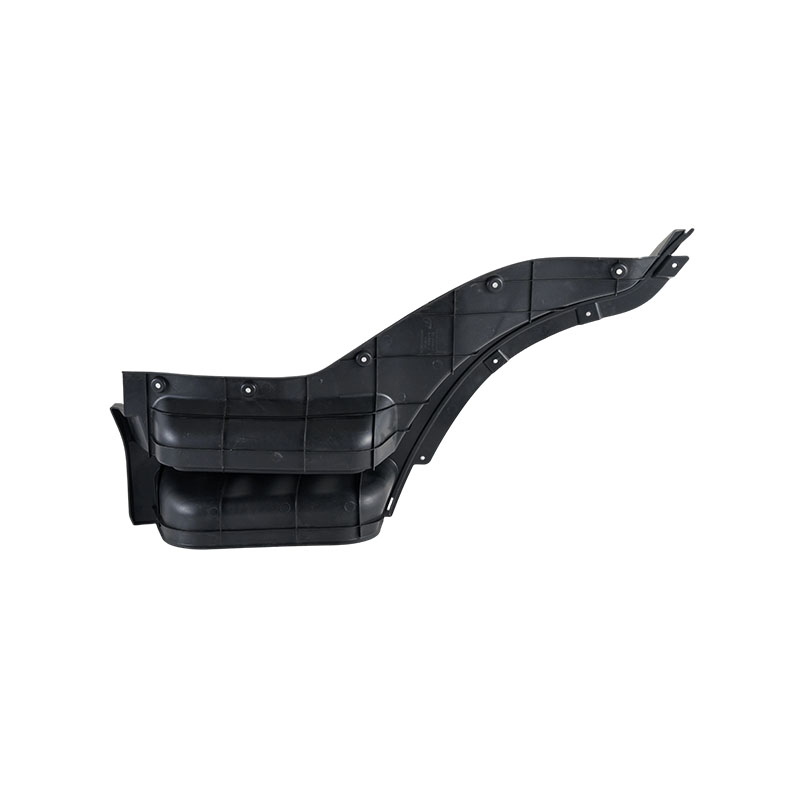
Lightweight Design Pressure from OEM Programs
One of the key drivers behind current search trends in the automotive tooling sector is the continued push for lightweight vehicle platforms. Electric vehicle development, in particular, has accelerated the need for optimized plastic exterior parts. Truck and passenger vehicle platforms are now designed with more plastic replacement components instead of traditional metal stamping.
For procurement teams, this creates direct challenges:
- Higher requirements for dimensional stability
- Increased demand for large-area molding consistency
- More complex surface texture control
- Tighter tolerance requirements for assembly alignment
These changes are forcing mold buyers to reassess tooling suppliers based on engineering capability rather than only machining cost.
Common Production Pain Points in Large Panel Moulding
In actual production environments, large injection molds for automotive panels often face recurring issues that affect output stability. Industry discussions among engineers highlight several common pain points:
- Warpage in large surface panels due to uneven cooling
- Difficult ejection balance for truck fender structures
- Long cycle times affecting mass production efficiency
- Surface defects caused by improper gate positioning
- Maintenance difficulty in high-cycle tooling environments
These issues are particularly important for export-oriented OEM projects, where consistent batch quality is required across different production locations.
Why Traditional Mold Designs Are No Longer Sufficient
Older mold design approaches were often optimized for cost and basic functionality rather than long-term production stability. However, modern automotive supply chains require higher repeatability and faster changeover capabilities.
Traditional molds often struggle with:
- Limited cooling channel optimization
- Lack of modular maintenance design
- Reduced adaptability for multi-variant vehicle platforms
- Lower efficiency in high-pressure injection environments
As a result, buyers are increasingly shifting toward suppliers who can offer engineering-driven mold design rather than standard tooling fabrication.
Engineering Improvements in Modern Injection Mould Systems
Recent tooling development trends emphasize structural optimization and process control. For large automotive exterior parts, modern solutions focus on:
- Conformal cooling design for temperature balance
- Reinforced cavity structure for long-cycle durability
- Improved venting systems to reduce surface defects
- Precision alignment systems for repeatable assembly quality
These improvements directly impact production yield and reduce downstream finishing costs, which is a key concern for Tier 1 suppliers.
Manufacturing Capability as a Procurement Decision Factor
For international buyers, mold procurement is no longer only a manufacturing purchase—it is an engineering partnership decision. Evaluations increasingly focus on:
- CAD/CAM capability for complex automotive geometry
- Experience in large-scale injection tooling
- Material selection for long-term wear resistance
- Quality inspection systems for dimensional accuracy
Suppliers with strong engineering integration capabilities are preferred because they can support early-stage design optimization rather than only producing finalized drawings.
Procurement Considerations for Global Buyers
From a sourcing perspective, automotive buyers are now prioritizing long-term production stability over short-term tooling cost savings. Key evaluation factors include:
- Mold lifecycle cost rather than initial price
- Maintenance accessibility during mass production
- Compatibility with multi-cavity or modular production systems
- Ability to support design modifications during vehicle updates
This shift reflects a broader trend in the automotive industry toward flexible production systems and faster model refresh cycles.
Future Outlook in Automotive Plastic Mould Development
As vehicle platforms continue to evolve, demand for larger and more complex injection tooling is expected to grow. Structural plastic components will play an even greater role in both commercial trucks and passenger vehicles, especially in EV platforms where weight reduction is critical.
In this evolving landscape, suppliers capable of delivering stable, high-precision tooling for both exterior and structural components will remain essential to global supply chains, especially for Plastic Car Panel Mould applications.