English
 中文简体
中文简体 русский
 عربى
عربىIn today’s automotive plastics industry, buyers are no longer evaluating tooling only by price or basic steel grade. Procurement teams working with a Plastic Injection Truck Fender Mould are increasingly focused on dimensional stability, cycle time reduction, and surface finish consistency across high-volume production. At the same time, demand for lightweight vehicle components continues to rise, pushing mold makers to deliver higher precision while maintaining faster delivery cycles and longer tool life.
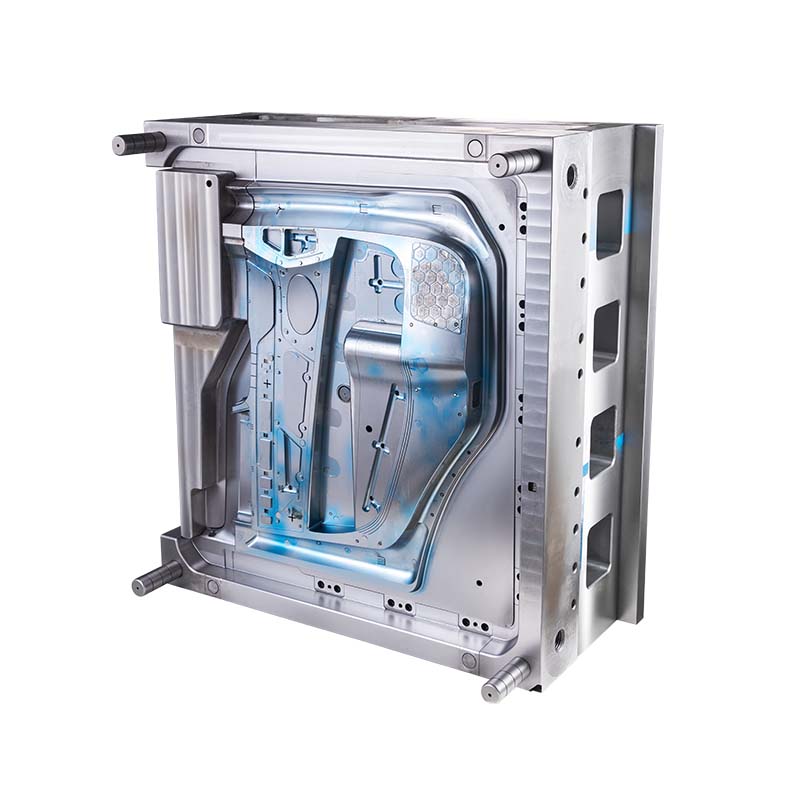
Across Europe and North America, OEM suppliers are also under pressure to reduce post-processing steps such as polishing and painting corrections. This shift is changing how engineering teams evaluate a Plastic Car Panel Mould, especially when parts must meet tight Class A surface requirements.
Demand Shift: From Cost-Driven to Performance-Driven Tooling
Recent industry discussions on automotive manufacturing forums show a clear shift in priorities. Buyers are asking more about mold flow optimization, cooling efficiency, and long-term maintenance cost rather than just upfront tooling price.
For large exterior components such as fenders and door panels, uneven cooling remains one of the biggest causes of warpage. Modern tooling strategies now integrate conformal cooling channels and simulation-driven mold design to reduce deformation before steel is even cut. This approach significantly improves first-shot success rates and reduces trial cycles.
Cooling System Optimization and Cycle Time Reduction
One of the most frequently discussed topics among engineering buyers is cycle time. Even a reduction of 5–10 seconds per cycle can translate into substantial annual savings in mass production.
Advanced mold design now focuses on:
- Uniform temperature distribution across cavity surfaces
- Independent cooling zones for complex geometries
- Reduced thermal stress in high-thickness sections
- Improved coolant flow efficiency using CFD simulation
These improvements are especially critical for exterior automotive parts where dimensional accuracy directly impacts assembly line efficiency.
Surface Quality Expectations for Exterior Automotive Parts
Automotive OEM standards for visible parts have become significantly stricter. For a Plastic Injection Truck Fender Mould, surface defects such as weld lines, sink marks, and flow marks are no longer acceptable at the final inspection stage.
To meet these expectations, toolmakers are increasingly adopting:
- High-polish steel grades for Class A surfaces
- Optimized gate positioning to control flow direction
- Sequential valve gating systems for large panels
- Enhanced venting design to avoid gas trapping
These technical adjustments help reduce downstream painting corrections, which is a key cost concern for Tier 1 suppliers.
Structural Strength and Mold Life Expectations
Long production runs require molds that maintain precision over hundreds of thousands of cycles. Engineering buyers now request detailed mold life estimates based on real operating conditions rather than theoretical figures.
For structural components such as bumpers and fenders, reinforced mold bases, heat-treated inserts, and wear-resistant coatings are commonly used to extend operational life. Proper maintenance planning is also becoming part of procurement discussions, especially for export-oriented manufacturers.
Engineering Collaboration in Early Product Development
A growing trend in automotive tooling is early-stage collaboration between mold makers and product designers. Instead of receiving finalized CAD files, many suppliers are now involved during the design-for-manufacturing (DFM) phase.
This helps optimize rib structure, wall thickness distribution, and gating strategy before tooling begins. As a result, production issues such as sink marks and warpage can be significantly reduced, saving both time and rework costs.
Quality Validation and Trial Transparency
International buyers are placing greater emphasis on validation transparency. Mold trial reports, dimensional inspection data, and sample consistency records are now standard requirements before shipment approval.
Common evaluation methods include:
- CMM dimensional inspection reports
- First article inspection (FAI) documentation
- Mold flow simulation comparison with actual results
- Short-shot analysis for flow verification
These documents help ensure that the tooling performs consistently across different production environments.
Precision Tooling Defines Competitiveness
The automotive injection molding sector is clearly moving toward higher precision, shorter development cycles, and lower defect tolerance. Suppliers that can combine engineering simulation, robust mold construction, and transparent validation processes are better positioned to support global OEM requirements.
In this evolving landscape, selecting a reliable Plastic Car Panel Mould partner is no longer just a sourcing decision—it is a long-term production strategy that directly affects product quality, cost efficiency, and market competitiveness.